Why Canadian Tire’s 50/50 milestone is a masterclass in sports business


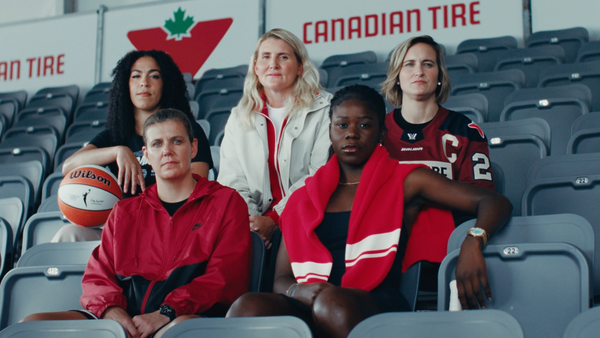
The GIST: In 2023, Canadian Tire Corporation (CTC) gave itself a three-year deadline to hit a 50/50 split of sponsorship dollars going towards women's and men’s professional sports. On Wednesday, the company achieved it. More than a milestone, this is a seismic shift in the sports business ecosystem.
Where companies once treated women’s sports as a single line item on their annual budgets, CTC and Ally Financial — which achieved the 50/50 mark earlier this spring — are living case studies that should encourage brands to move beyond being just a logo on a piece of merch, and into contributing to the future infrastructure of women’s sports.
The ripple effect of its investments is far-reaching and anchors a financially viable business strategy. In the three years since CTC announced its Women’s Sports Initiative, the pro women’s sports market in Canada has more than doubled and a conservative estimate sees it reaching as high as $570M by 2030, representing 380% growth.
- CTC and its subsidiary SportChek have been instrumental to that progress, becoming founding partners of the PWHL and the NSL, as well as official partners of Canada’s first WNBA team, the Toronto Tempo. Talk about forward motion.
Meanwhile, Ally has been at the forefront of that explosive growth in the U.S., where the market is expected to grow 16% YoY through 2030 — roughly 3x faster than men's sports, according to consulting firm McKinsey & Company. That same report also highlighted a potential $2.5B in annual revenue for rights holders in women’s sports leagues by 2030.
The takeaway: Billion-dollar valuations and profits in sports are not just from ticket sales or the team store: Real, sustained growth comes from media deals and corporate sponsorships. By funding the foundations of these leagues, brands like CTC and Ally provide the financial runway required to secure landmark broadcasting deals, attract top talent, and secure necessary operational resources necessary to protect and support players.
- It all goes to show that women’s sports is no longer a marketing experiment — it’s a high-stakes competition and brands watching from the sidelines are going to miss out on massive future holdings in a surging market. You snooze, you lose.
Enjoying this article? Want more?

Sign up for The Call Up and receive sports industry intel straight to your inbox two times a week